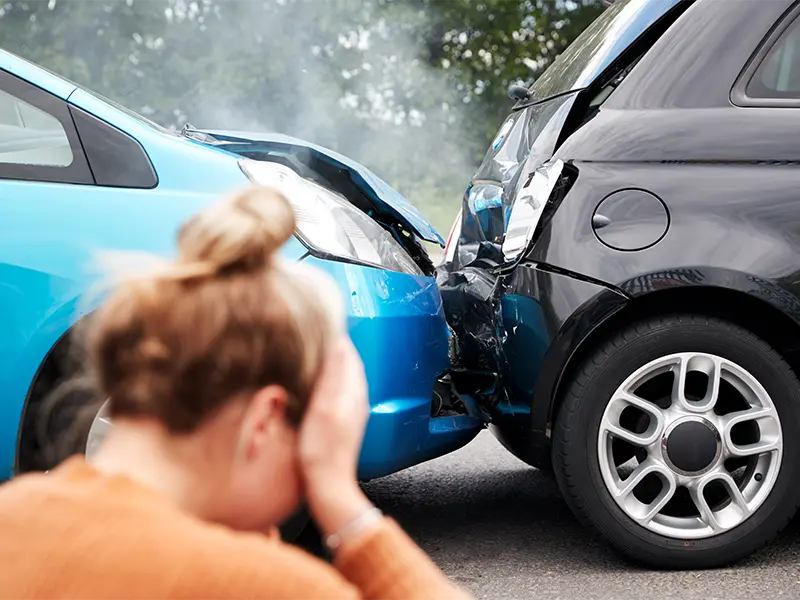
Road traffic accidents are one of the most common reasons why people seek legal advice in Cyprus. Some cases are relatively straightforward and are settled directly with the insurance company. Others require careful legal, medical and factual analysis, especially where there are serious injuries, disputed liability, long-term symptoms, loss of earnings, or future medical needs.
The following FAQ answers some of the most common questions about car accident and personal injury claims in Cyprus.
1. Can I claim compensation after a car accident in Cyprus?
Yes, if the accident was caused fully or partly by the fault or negligence of another driver or party, you may be entitled to claim compensation.
A claim will usually be based on negligence. In simple terms, this means that another person failed to drive or act with reasonable care, and that this caused you injury or loss. Examples may include careless driving, failing to keep a proper lookout, driving too fast for the circumstances, failing to stop at a junction, changing lanes unsafely, or causing a collision by breaching the rules of the road.
Each case depends on its facts. It is not enough to show that an accident happened. It is also necessary to prove who was at fault, what injuries were caused, and what losses resulted from the accident.
2. Do most car accident claims go to court?
No. Many road traffic accident and personal injury claims are settled out of court, especially where liability is clear and the injuries can be properly supported by medical evidence.
In practice, the injured person’s lawyer will usually gather the relevant evidence, obtain medical reports, calculate the damages, and submit a claim to the insurance company. Negotiations may then take place. If a reasonable settlement can be achieved, court proceedings may not be necessary.
However, not every case settles. A claim may need to proceed to court if the insurance company denies liability, alleges contributory negligence, disputes the seriousness of the injuries, challenges the medical evidence, or makes an offer that is too low.
3. Who pays the compensation?
In most road traffic accident cases, compensation is paid by the insurance company of the driver who caused the accident. Cyprus has compulsory third-party motor insurance, so the insurer is usually directly involved in handling and settling such claims.
This does not mean that the insurance company will automatically accept the claim or pay the amount requested. The insurer will usually investigate the accident, consider liability, review the medical evidence, and assess the value of the claim before making any settlement offer.
4. Will I have to pay legal fees myself?
This depends on the arrangement with your lawyer and on how the case develops.
In many road traffic accident cases, where the claim is successful, the claimant’s legal costs are often recovered from the insurance company as part of the settlement or court process. However, this does not mean that every cost, expense or fee is automatically recoverable in full.
The exact position depends on the terms agreed with your lawyer, the amount of work required, whether court proceedings are issued, the outcome of the case, and any costs order made by the court. It is important to discuss fees clearly at the beginning, so that you understand how legal fees and expenses will be handled.
5. What should I do immediately after a car accident?
If you are involved in a road traffic accident, you should first make sure that you and anyone else involved are safe. If there are injuries, emergency assistance should be requested.
You should also try to keep records of the accident. This may include photographs of the vehicles, the accident scene, road signs, skid marks, traffic lights, damage, and any visible injuries. You should exchange details with the other driver and obtain insurance information where possible.
If there are witnesses, their names and contact details may be important. You should also report the accident to the police where required, especially if there are injuries or significant damage.
6. Why are medical reports so important?
Medical evidence is central to a personal injury claim. The court or insurance company cannot properly assess the value of an injury claim simply because the injured person says that they were in pain.
Medical reports help establish what injuries were suffered, whether those injuries were caused by the accident, how serious they were, what treatment was required, how long recovery took, and whether there are any permanent or long-term symptoms.
Depending on the case, reports may be required from orthopaedic doctors, neurologists, physiotherapists, psychiatrists, psychologists or other specialists. In more serious cases, medical evidence may also address future treatment, loss of earning capacity, disability, care needs, or long-term prognosis.
7. Should I keep receipts and proof of expenses?
Yes. This is very important.
Financial losses must usually be proven. If you claim medical expenses, physiotherapy costs, medication, travel expenses, vehicle repair costs, loss of earnings or other out-of-pocket expenses, you should keep invoices, receipts, payment confirmations, employer letters, payslips and any other relevant documents.
Without proper evidence, it may be difficult to recover those expenses, even if they were genuinely incurred.
8. What are general damages?
General damages are compensation for losses that cannot be calculated with exact mathematical precision. In personal injury cases, they usually cover pain, suffering, discomfort, loss of amenity and the effect of the injury on the injured person’s life.
For example, general damages may compensate a person for pain from a neck injury, back injury, fracture, scarring, psychological symptoms, reduced mobility, inability to exercise, disturbed sleep, inconvenience, or reduced enjoyment of day-to-day life.
The amount of general damages depends on the nature and seriousness of the injury, the duration of symptoms, the medical evidence, the effect on the person’s life, and the guidance provided by previous court decisions.
9. What are special damages?
Special damages are financial losses that can be calculated and proven. These are usually specific expenses or losses suffered because of the accident.
Examples include medical bills, physiotherapy fees, medication, diagnostic tests, transport costs, repair costs, loss of income, cost of domestic assistance, and other measurable expenses.
Special damages must be properly pleaded and proven. This is why it is important to keep all supporting documents from the beginning.
10. How are general damages calculated?
General damages are not calculated using a fixed table or automatic formula. The court will consider the medical evidence, the seriousness of the injury, the length of recovery, the degree of pain and suffering, whether there is permanent disability, and how the injury has affected the claimant’s life.
Previous case law is also important. Earlier decisions of the Cyprus courts, especially in similar injury cases, provide guidance on the level of compensation that may be appropriate. However, each case is assessed on its own facts. Two people may suffer similar injuries but receive different compensation if their recovery, symptoms, work, lifestyle or long-term prognosis are different.
For example, a short-term soft tissue injury will usually be valued very differently from a fracture requiring surgery, a serious spinal injury, or an injury causing permanent disability.
11. Can I claim if I was partly at fault?
Possibly, yes.
In some cases, both drivers may share responsibility for the accident. This is known as contributory negligence. If the injured person is found to be partly at fault, compensation may be reduced by a percentage.
For example, if the total value of the claim is assessed at €20,000 but the injured person is found to be 25% responsible for the accident, the compensation may be reduced accordingly.
The issue of contributory negligence depends on the evidence. It may arise where a person was speeding, failed to wear a seatbelt, crossed the road carelessly, failed to keep a proper lookout, or otherwise contributed to the accident or the extent of the injury.
12. What if the insurance company makes an offer?
An offer from the insurance company should be considered carefully. It may be reasonable, but it may also be too low, especially if it is made before all medical evidence is available.
Before accepting any settlement, it is important to understand whether the offer covers all injuries, all expenses, future treatment, loss of earnings, and any long-term consequences. Once a final settlement is accepted, it is usually very difficult to reopen the claim later.
For that reason, it is often advisable not to settle a personal injury claim too early, especially where symptoms are ongoing or the medical prognosis is uncertain.
13. How long does a personal injury claim take?
The time required depends on the facts of the case.
A relatively simple claim, where liability is accepted and the injuries are minor, may settle within a shorter period once medical evidence is complete. More serious or disputed cases can take much longer, especially if court proceedings are necessary.
It is often better to wait until the medical position is sufficiently clear before settling. If the injury has not stabilised, it may be difficult to value the claim properly.
14. What happens if the case does not settle?
If the claim cannot be settled, court proceedings may be filed. The case will then proceed according to the Civil Procedure Rules and the court’s timetable.
The claimant must prove liability, causation and damages. Evidence may include witness statements, police material, photographs, medical reports, expert evidence, receipts, employment records and other documents.
Even after court proceedings are filed, settlement remains possible. Many cases settle before trial, sometimes after further evidence is exchanged or after negotiations take place.
15. Are there procedural rules before going to court?
Yes. Since the introduction of the new Civil Procedure Rules in Cyprus, parties are expected to approach civil claims in a more structured way. For road traffic accident and personal injury claims, the relevant pre-action protocol is important.
The purpose is to encourage early exchange of information, proper investigation of the claim, and settlement where possible. A well-prepared claim should therefore set out the facts, the injuries, the losses claimed, and the supporting evidence.
Failure to handle the pre-action stage properly can affect the progress of the case and, in some circumstances, may also have costs consequences.
16. What evidence is useful in a car accident claim?
Useful evidence may include photographs, police reports, witness details, insurance details, medical certificates, hospital records, specialist reports, physiotherapy records, receipts, invoices, employment records, payslips, tax records, and correspondence with insurers.
In serious cases, expert evidence may be needed not only from doctors, but also from accident reconstruction experts, accountants, vocational experts, or other specialists, depending on the issues in dispute.
The stronger and clearer the evidence, the easier it usually is to negotiate a fair settlement.
17. Can I claim for future losses?
Yes, where properly supported by evidence.
Future losses may include future medical treatment, future physiotherapy, future loss of earnings, reduced earning capacity, future care, or long-term assistance. These claims are usually more complex and require careful medical and sometimes financial evidence.
A claim for future loss should not be speculative. It must be based on evidence showing that the loss is likely to arise and is connected to the accident.
18. Can I claim for psychological injury?
Yes, if the psychological injury was caused by the accident and is supported by appropriate medical evidence.
Some accident victims suffer anxiety, sleep disturbance, driving-related fear, post-traumatic symptoms, depression or other psychological consequences. These symptoms should be properly assessed by a suitable medical specialist where they form part of the claim.
19. Should I speak directly with the insurance company?
You may need to notify insurers and provide basic information, but you should be careful about giving detailed statements, accepting blame, agreeing to settlement figures, or signing documents without legal advice.
Insurance companies handle claims regularly. An injured person may not know the full value of the claim, especially before medical evidence is complete. Legal advice can help avoid an early or undervalued settlement.
20. How can a lawyer help with a car accident claim?
A lawyer can assess liability, advise on the strength of the claim, gather evidence, communicate with the insurance company, obtain medical reports, calculate damages, negotiate settlement, and file court proceedings if necessary.
In a personal injury claim, the role of the lawyer is not only to send letters. A properly prepared claim requires legal analysis, medical evidence, proof of expenses, understanding of case law, and careful assessment of the risks and value of the claim.
21. What should I bring to a first meeting with a lawyer?
You should bring any documents and evidence you have, including photographs, police references, insurance details, medical certificates, hospital documents, receipts, invoices, correspondence with insurers, details of witnesses, and proof of loss of earnings if relevant.
Even if you do not have everything, it is still useful to seek advice early. Some evidence may need to be obtained quickly, and delays can sometimes make a claim more difficult.
22. What is the most important thing to remember?
A personal injury claim must be proven. It is not enough to say that an accident happened or that pain was suffered. The claim must be supported by evidence showing fault, injury, causation and financial loss.
Many cases can be settled without court proceedings, but a fair settlement usually depends on proper preparation. Medical reports, receipts, evidence of expenses, and careful legal assessment are essential.
Our Services
At A. Danos & Associates LLC, we advise and represent clients in road traffic accident and personal injury claims in Cyprus.
We assist with the assessment of liability, communication with insurance companies, collection of medical and financial evidence, calculation of general and special damages, settlement negotiations, and court proceedings where settlement is not possible.
If you have been injured in a car accident, obtaining early legal advice can help you understand your rights, avoid common mistakes, and ensure that your claim is properly prepared.