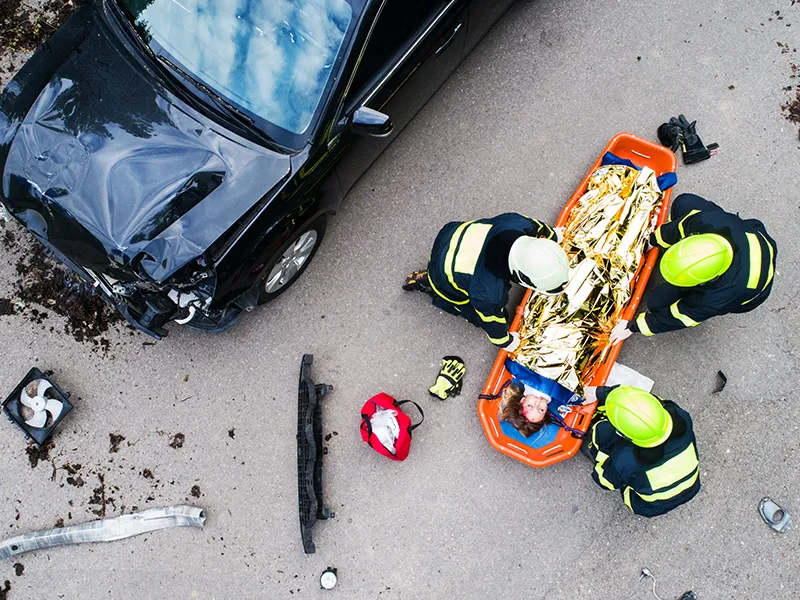
When a person dies because of someone else’s negligence, the family will usually have two questions first: who can claim, and what can be recovered? The answer is not always straightforward. The claim for the family’s lost support is different from a claim made by the deceased’s estate for losses suffered before death. Different people may benefit from each claim.
The position should be investigated early. There may be children, a spouse living abroad, an unfinished probate application and a police investigation still in progress. None of these matters prevents the family from taking advice or protecting the claim.
When there is a claim
Fatal accident claims arise most often from road collisions, accidents at work and unsafe premises. They can also follow negligent medical treatment. The fact that somebody has died does not, by itself, establish legal responsibility. In a medical case, an unsuccessful outcome is not necessarily negligence.
The evidence must show the legal basis for the claim. In negligence, that normally means proving a duty of care, a breach of the required standard and a causal link between the breach and the death. If the injured person survived for a period, or had a serious pre-existing illness, medical evidence may be needed to separate the original injury from other possible causes of death.
The potential defendants must also be identified. Depending on the facts, this could be a driver, an employer, the occupier or operator of premises, a healthcare provider or more than one of them. Any relevant insurance cover should be established at the same time.
Insurers sometimes argue that the deceased contributed to the fatal injury. If that is proved, damages can be reduced. The allegation still has to be supported by evidence; it is not enough for it to appear in an insurer’s first letter.
Who can benefit
The statutory list is wider than many people expect. It includes the deceased’s spouse, children and other descendants, parents and other ancestors, and certain brothers, sisters, uncles, aunts and their children. The legislation also deals with adoption, stepchildren and family relationships in which a person was treated as a parent or child.
A civil partner in a civil union formed under Cyprus law is treated as a spouse for this purpose. An unmarried partner who was simply living with the deceased does not automatically have the same status.
Being on the list does not, however, prove a financial loss. A relative claiming loss of support must show what the deceased provided, or what there was a reasonable expectation the deceased would provide. An adult child is not excluded merely because of age. If the deceased was paying the child’s living expenses, that support may be relevant. On the other hand, the family relationship alone is not enough.
The same applies to inheritance. A person named in a will is not, by that fact alone, a dependant under the fatal accident provisions. Their position as a beneficiary of the estate is dealt with separately.
Who brings the case
As a rule, the action is brought in the name of the deceased’s executor or administrator for the benefit of the people entitled to claim. If there is no personal representative, all or any of those people can bring the action themselves. The same alternative is available if an executor or administrator has not brought the action within twelve months of the death.
That does not mean the family has to wait twelve months before doing anything. The first step is to establish whether a personal representative exists and whether an action has already been issued.
Only one action can be brought under the fatal accident provisions for the same death. All potential beneficiaries should therefore be identified at the outset. A separate settlement negotiated by one relative can create problems if it overlooks another person’s claim.
Relatives living outside Cyprus can instruct a Cyprus lawyer from abroad. If the deceased lived in another country or the accident occurred elsewhere, jurisdiction, applicable law and estate representation may need to be considered. Documents from abroad may require certification or translation, but a relative will not necessarily have to travel to Cyprus.
Financial support and work done at home
The largest part of the claim is often the support which the deceased would have provided had they lived. It can include rent or mortgage payments, school costs and ordinary household expenses.
The calculation is based on the deceased’s likely net contribution, not simply on gross salary. Their own living expenses have to be taken into account. The likely duration of the support is also relevant. Age, health, occupation and expected working life matter, as do the circumstances of each dependant.
Self-employed income needs particular care. Business turnover is not the deceased’s personal income. Accounts, tax records and the way the business operated may all need to be examined. If the company continues after the death, the question is what work the deceased performed and what income was connected with it.
Paid employment is not the only form of support. A parent who did not earn a salary may have provided daily childcare and most of the work in the home. The value of that work can form part of the claim. Evidence of the care actually provided, the time involved and the cost of replacing it will be relevant. The same issue can arise where the deceased regularly looked after or assisted another dependant.
There is no reliable figure based only on salary or age. The award has to reflect the family’s actual circumstances and the evidence available.
Bereavement compensation
Bereavement compensation is separate from the financial dependency claim and is available to a narrower group. It is for the benefit of the deceased’s spouse and children. A qualifying civil partner is treated as a spouse.
If there is no spouse, civil partner or child, the parents may qualify, subject to the statutory rules concerning the deceased’s parentage. The amount is a total award shared between the people entitled to it. It is not a full separate payment for each relative, and it does not replace compensation for proven lost support.
What the estate can claim
If the deceased remained alive after the accident, even for a short period, the estate may have its own claim. Depending on the evidence, this can include pain and suffering, earnings lost before death and medical expenses. The executor or administrator normally brings that claim.
The estate cannot claim the earnings the deceased would have received after death as though the deceased were still alive. The family’s future loss of support is dealt with through the fatal accident claim.
Funeral expenses can also be recovered in an appropriate case. The claim should state who incurred the expense and whether it belongs in the estate’s claim or the dependants’ claim. An expense cannot be recovered twice, so invoices and payment records should be retained.
An inheritance or life-insurance payment should not automatically be treated as reducing the compensation. Benefits received because of the death are disregarded when damages are assessed under the fatal accident provisions.
Evidence and investigations
Some evidence disappears quickly. CCTV can be overwritten, vehicles can be repaired and witnesses can move away. Families should keep photographs, messages and witness contact details and should not wait for the police file before preserving what they already have.
The documents will depend on the accident, but they commonly include:
- the death certificate, medical records and any post-mortem report;
- police or workplace investigation material and witness details;
- documents confirming family relationships;
- payslips, tax returns, business accounts and evidence of financial support; and
- receipts, together with any will, grant of probate or letters of administration already obtained.
It is not necessary to have every document before seeking advice. The missing material can be identified and obtained as the claim is prepared. Expert evidence may be required on the accident, medical causation or the financial consequences of the death.
Police proceedings and time limits
The civil claim does not depend on a criminal conviction. The Court decides civil liability on the balance of probabilities, so the absence of a prosecution does not by itself defeat the claim. A police investigation may nevertheless produce useful evidence, and it need not be completed before the civil claim is prepared.
The statutory fatal accident action must be brought within three years from the death. The deadline should be checked in the individual case, including any provision affecting how time is calculated. A claim belonging to the estate has its own limitation issues.
Negotiations with an insurer do not, by themselves, stop time running. Nor do an ongoing police investigation or an incomplete probate application.
Settlement
Before accepting an offer, the family should know exactly which claims it covers and how the money will be divided. The agreement may also settle the estate’s claim. If children are involved, the requirements concerning representation, approval of the settlement and protection of their compensation must be dealt with.
The family should also receive advice on the value of the claim, the evidence on liability, the costs and risks of continuing and the effect of any discharge or final release.
How we can help
A. Danos & Associates LLC advises families on fatal accident claims in Cyprus. We investigate responsibility, identify the people entitled to claim, assess the financial losses and deal with insurers. Where necessary, we conduct the Court proceedings and coordinate the estate work required for the claim.
We can begin with the documents available and give the family a practical view of the next steps, the evidence still required and the issues that need to be dealt with before a claim is settled.